Book Description
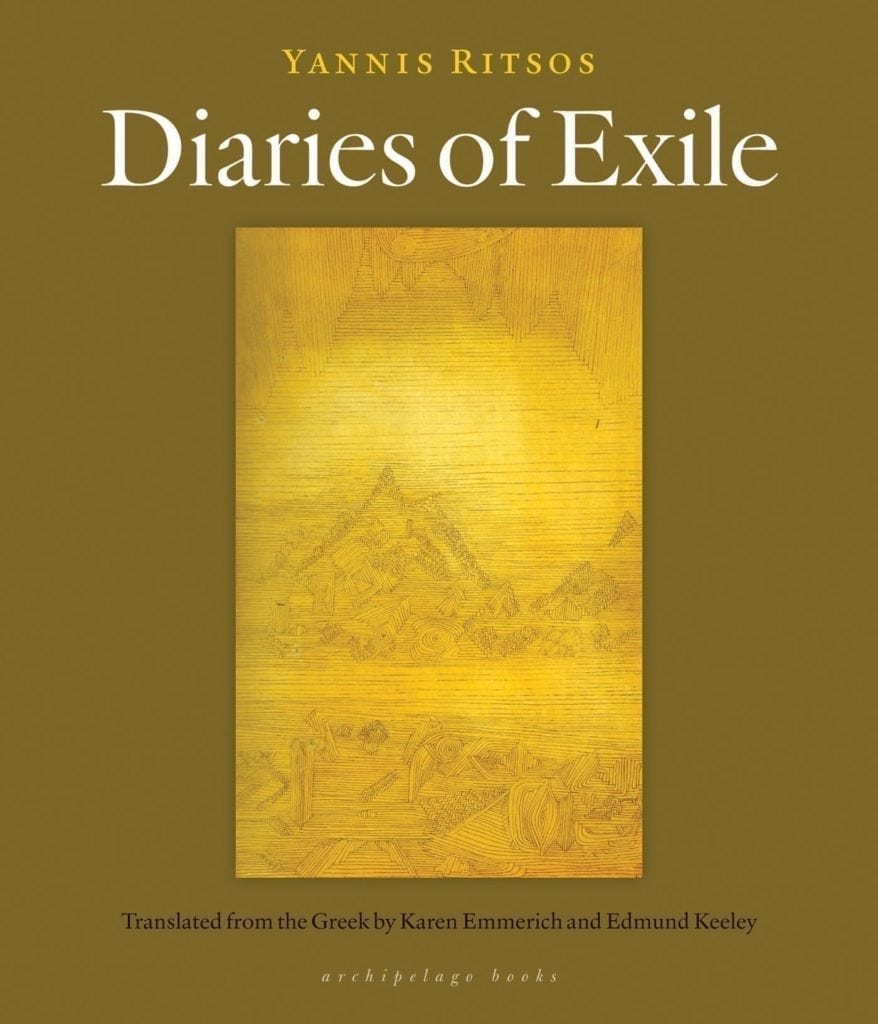
 Called “the greatest poet of our age” by Louis Aragon, Yannis Ritsos is a poet whose writing life is thoroughly entwined with the contemporary history of his homeland. Nowhere is this more apparent than in this volume, a series of diaries-in-poetry Ritsos wrote between 1948 and 1950, during Greece’s Civil War, while a political prisoner first on the island of Limnos and then at the infamous camp on the desert island Makronisos. Even in these darkest of times, Ritsos dedicated his days to poetry, trusting in writing and in art as collective endeavors capable of fighting oppression, of bringing people together across distance and time. These poems offer glimpses onto the daily routines of prison life, the quiet violence he and his fellow prisoners endure, the ebbs and flows of the prisoners’ sense of solidarity, and the struggle to maintain humanity through language.
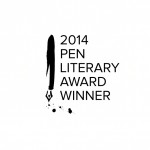
Winner of the 2014 PEN Award for Poetry in Translation.
Ritsos' breath raises a wind in which wafted and swirled flakes from the crust of our land, seeds of its vegetation and sparks of its sky. Without Ritsos' eloquence, Greeks would have forgotten how to name a major part of all those things that are there before their eyes, and restoration of his work to its totality is an imperative duty to the Greek nation itself, which deserves to regain its unity after nearly forty years of strife.
— Pantelis Prevelakis
Myth in Ritsos' works on three main levels reflecting the historical background, personal memory and contemporary social problems. Due to the symbolic weight that the myth carries, it enriches the psychological truth of the real-life persons that the poet carries within, as he also carries the emotional weight of a childhood destined to crumble under disease, disaster and grief.
— Chrysa Prokopaki
Ritsos writes of seasons shifting to reflect a coming darkness. The bitter desolation that is war. Hard, sharp, hostile words that paint a time too painful to remember and yet which must be written.
— Cathi Shaw
In a recent edition by Archipelago Press, a beautiful translation of his Diaries of Exile by Karen Emmerich and Edmund Keeley opens up this unique poetic memoir to an English audience. What is remarkable about these poems is that in spite of the critical situation, Ritsos managed to find moments of painfully accurate beauty in observation of his suffering, the mark of a true poet.
— Stephanos Papadopoulos
The Greek poet Yannis Ritsos, interned on one prison island or another in the late 1940s and early 50s, wrote poems recording his experiences in these bleak settings. Beautifully edited and translated by Karen Emmerich and Edmund Keeley as Diaries of Exile, his journal-like verses record soccer games, meals, the late arrival of newspapers, moonlight, sheep bells.
— Rachel Hadas
Its power comes from the way it blends the diaristic with the poetic ... There is no pity in the book, nor resignation, despite the circumstance. That clarity ... has to do with giving witness, with the idea of poetry as testimony. Again and again, Ritsos records the smallest moments, as if were he to leave out a single detail of his incarceration, the whole experience might disappear. This is what poetry can do: preserve the moments that would otherwise be forgotten, and in so doing, recreate the world.
— David Ulin, LA Times
Ritsos is always Ritsos. He suffered much personal and public violence, in the autocratic Greece of the 20th century, but his poems resist judgment. They flower with the force of humility and pathos. We readers are his brothers and children and comrades, under the hot sun which is and is not a god, beside the 'endless sea.' Love trumps Death. Every object is awake. 'Every hour is our hour.'
— John Wall Barger
I like the free verse, bare-bones style of words arranged succinctly, creating intense, vivid images of Ritsos' prison life, and longings. In ten lines Ritsos's words and restrained emotions shine like brilliant fireflies against a dark night. I had Prevert and Lorca; now I have Ritsos.— Joanne Shea
—
—

 Called “the greatest poet of our age” by Louis Aragon, Yannis Ritsos is a poet whose writing life is thoroughly entwined with the contemporary history of his homeland. Nowhere is this more apparent than in this volume, a series of diaries-in-poetry Ritsos wrote between 1948 and 1950, during Greece’s Civil War, while a political prisoner first on the island of Limnos and then at the infamous camp on the desert island Makronisos. Even in these darkest of times, Ritsos dedicated his days to poetry, trusting in writing and in art as collective endeavors capable of fighting oppression, of bringing people together across distance and time. These poems offer glimpses onto the daily routines of prison life, the quiet violence he and his fellow prisoners endure, the ebbs and flows of the prisoners’ sense of solidarity, and the struggle to maintain humanity through language.