Book Description
Winner of the 2010 PEN Translation Prize
Shortlisted for Three Percent’s 2010 Best Translated Book Award
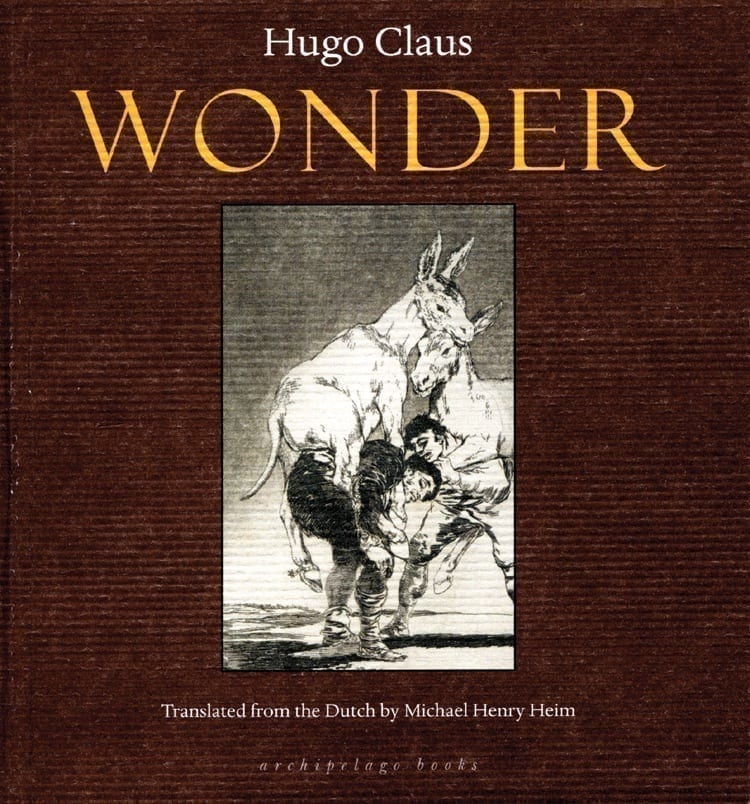
In his novels, Hugo Claus lays bare the haunted underbelly of twentieth-century Flanders with portraits of a shattered society and warped psyches rising to a mythic pitch. In Wonder, Victor-Denijs de Rijckel, a bewildered schoolteacher, is led to a distant village in pursuit of a mysterious woman. Tracking her to an underground political conference in a remote castle, he poses as an expert on Crabbe, a messianic Belgian fascist who disappeared in World War II. Drifting into a dense fog as his sanity begins to crumble, de Rijckel soon finds himself trapped among a handful of desperate individuals still living out the consequences of their collaboration with the Nazis decades earlier and all of whom are united by their belief that Crabbe’s return is imminent. The subtle cadences of the prose and the dense emotional texture of characters lost in complex moral labyrinths make Wonder a symphony only Claus could have composed.
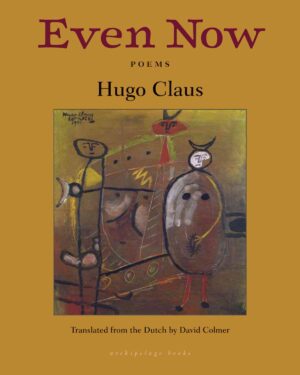
Claus rages against the decay of the physical self while desire remains untamed. From the beginning, his poetry has been marked by an uncommon mix of intelligence and passion, given expression in a medium over which he has such light-fingered control that art becomes invisible.
— J.M. Coetzee
While fully aware that such an honorable title can only be used in great exceptions in Flemish literature, I would call Wonder a masterpiece.
— Paul de Wispelaere, Vlaamse Gids
Claus's work is just as broad as the soul is deep.
— Gerrit Komrij
The greatest writer of my generation.
— Remco Campert
To speak today of a still largely-unknown major work on European Fascism . . . seems presumptuous, rather like announcing the existence of, if not a new continent, at least a land mass of strange and significant proportions. But in discussing Wonder, it would be churlish not to admit to an explorer’s exhilaration at discovery.
— Sam Munson, The National
What Claus excels at is in how he allows the story to unfold. At times the reader is led through the same fog that de Rijckel wanders in, but there are also moments of bright clarity.
— The Complete Review
Like the other fictions and poems by Claus . . . Wonder is an extraordinarily powerful and original work.
— ExploringFictions
. . . the narrative is a bit disjointed, non-linear, and hazy. But it also has a very classic, very capital-l Literary feel. This is a book that’s going to be read for years . . .
— Three Percent
As to the language, Claus’s abilities are astonishing . . .
— Conversational Reading
Originally published in 1962, Wonder is a reminder of the energy and experimental verve with which so many writers of the Fifties and Sixties (Malaparte, Bernhard, Grass, Böll, Burgess, Pynchon) conjured up the disjointed and rapidly complicating world they found themselves in.
— Tim Parks, The New York Review of Books
Claus weaves together a rich tapestry, presenting an array of memorable characters . . .
— The Driftless Area Review