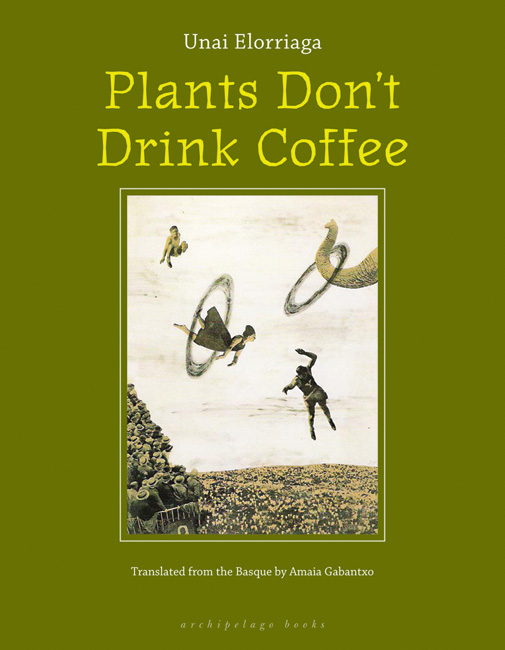
Book Description
Four stories narrated from four different perspectives criss-cross throughout this powerful and lighthearted novel. The young Tomas — who wants above all else to be intelligent — draws us into the web of his curious mind, magnifying misadventures and stumbling upon all sorts of small wonders. Through an omniscient narrative, we learn all about his eccentric entourage, from their surrealist creation of a rugby field on a golf course, the mystery of why a couple of forty years never married, and the intrigue surrounding his grandfather’s role in a European carpentry competition.
Unai Elorriaga does away with the boundaries and coordinates of conventional literature and takes them elsewhere: to the surprising literary territory of a writer with no hang-ups.
— Harkaitz Cano
I read Unai Elorriaga’s latest novel almost without stopping to breathe. Breathlessly, yes, but not quickly, because Elorriaga's books are not the kind you read in two or three hours and put back on the shelf. It is a very good novel. Incredibly good.
— Gorka Bereziartua, Eremulak.com
Vredaman must be understood from a double perspective: as an approach to reality from a non-realist position and also as the practice of pure creativity...Thus while Elorriaga seeks to explain reality outside conventional lines, he doesn't avoid it. The events that take place in the novel are more than uncontrolled inventions: they aim to give the world meaning, and are sometimes imbued with naivety...In other words, Elorriaga does whatever he wants, without concern for convention.
— El Mundo
In these stories there is a psychological process, a learning curve, a painful jump toward crucial knowledge. In Vredaman that jump takes place toward the end, which helps the story glide along joyously, aided by the novel’s two main strengths: the innocent but brilliant, and almost shrewd language of the child narrator and the abundance of secondary stories.
— El País
Short sentences, measured words, dialogues pregnant with silences, letters...all can be found in this lively narrative. It is the characters, the stories, and above all, the transparency and gracefulness of the child's outlook that add freshness and strength to Elorriaga's latest book.
— Berria
This is the last book that made us cry. It made us cry with a wonderful hurt that made us remember what life was like. If you haven’t read Plants Don’t Drink Coffee by Unai Elorriaga you should run out and purchase it, and you should drag it across your eyes. Don’t put it at the bottom of a stack. Don’t make it the caboose of some glorified book-domino train. It’s set in the Basque country of Spain. It contains rugby, and dragon flies, and carpentry competitions, and old love letters looked over. We can’t tell you much else, because it would ruin the tale. Each narrative, in the four narrative split story, is packed with rose-petal scented suspense.
— Dark Sky Magazine
Any who appreciate foreign literature will very much enjoy Plants Don’t Drink Coffee.
— Midwest Book Review
Unai did everything right in his writing and the translation was incredible as well (by Amaia Gabantxo). It was one of those books where you feel the need to keep reading it through the chapter breaks, and every time you sit down you want to lap it up.
— dreadlockgirl.com
. . . Elorriaga’s fanciful narrative captures the slight, quotidian dramas of small town life and imbues them with the clear-eyed wonder of a fairytale.
— Three Percent