Sait Faik Abasıyanık
Ryunosuke Akutagawa
Peter Altenberg
Gerbrand Bakker
Attila Bartis
Buddhadeva Bose
Herman Charles Bosman
Breyten Breytenbach
Georg Büchner
Mircea Cartarescu
Aimé Césaire
Aimé Césaire
Eric Chevillard
Hugo Claus
Albert Cohen
Julio Cortázar
Joseph Coulson
Louis Couperus
Rene Crevel
Mahmoud Darwish
Carol Dunlop
Marguerite Duras
Unai Elorriaga
Dominique Fabre
Corsino Fortes
Frankétienne
Jean Giono
Witold Gombrowicz
Brothers Grimm
Meng Hao-Jan
Heinrich Heine
David Hinton
Friedrich Hölderlin
Bohumil Hrabal
Miljenko Jergović
Elias Khoury
Heinrich von Kleist
Karl Ove Knausgaard
Abdellatif Laabi
Abdellatif Laâbi
Halldór Laxness
Dulce Maria Loynaz
Henri Michaux
Pierre Michon
Robert Musil
Wiesław Myśliwski
Gérard de Nerval
Joăo Cabral de Melo Neto
Cyprian Norwid
Novalis
Enrico Pea
Josep Pla
Francis Ponge
Jacques Poulin
Rainer Maria Rilke
Yannis Ritsos
Joseph Roth
Tadeusz Rózewicz
Elisabeth Rynell
Yuri Rytkheu
Miltos Sachtouris
Josep Maria de Sagarra
Yom Sang-seop
Severo Sarduy
Maurice Scčve
Nichita Stănescu
Wilma Stockenström
Antonio Tabucchi
Ahmet Hamdi Tanpinar
Marina Tsvetaeva
Magdalena Tulli
José Ángel Valente
Ernst Weiss
Charles De Wolf
Also see Archipelago translators
Albert Cohen
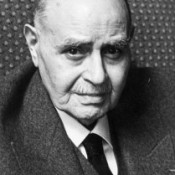
Albert Cohen was born on the island of Corfu in 1895 and emigrated to France when he was five. He grew up in Marseilles and studied law at the University of Geneva, becoming a Swiss citizen. During the 1930s he devoted himself to writing and after the fall of France spent seven years in London, where he was a legal adviser to the Intergovernmental Committee on Refugees. In 1947 he returned to Geneva and was in charge of a division of the International Refugee Organization. After 1952 he resumed his literary activities, determined to complete his novel-cycle begun with Solal (1930) and Mangeclous (1938) and ending with Belle du Seigneur (1968) and Les Valereux (1969). Belle du Seigneur was awarded the French Academy's Grand Prix du Roman. He died in 1981.
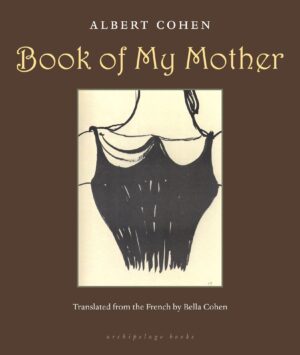
"Albert Cohen defies classification. Born in Corfu, raised in France, holder of a passport issued by the Ottoman Empire until he was twenty-four, when he became a Swiss citizen, he claimed his true homeland was the French language.... In many ways, [Book of My Mother] remains a wartime book written by an exile. But it is much more than this. Cohen turns his grief into a meditation on human solitude. We each become islands, worn down by circumstance and the hostility of other people. But we are also very diligent architects of our own isolation, for we deny love through our own selfishness. Cohen may chide his mother... but he is much harder on himself.... The book is a study in guilt, an act of contrition, for in mourning his mother he grieves for his own lost childhood... [It] is an achingly honest, autumnal book, generous in its humanity, composed with art but without guile, the sincerest tribute of a neglectful son.... And in translating her husband's prose into sly, poetic, incantatory English, Bella Cohen... has reunited him with words, his true homeland." - from David Coward's introduction
Works published by Archipelago Books: